
1 / 3
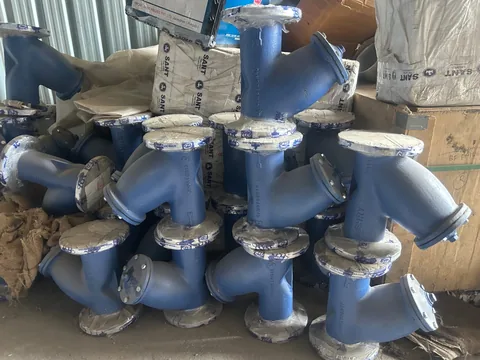
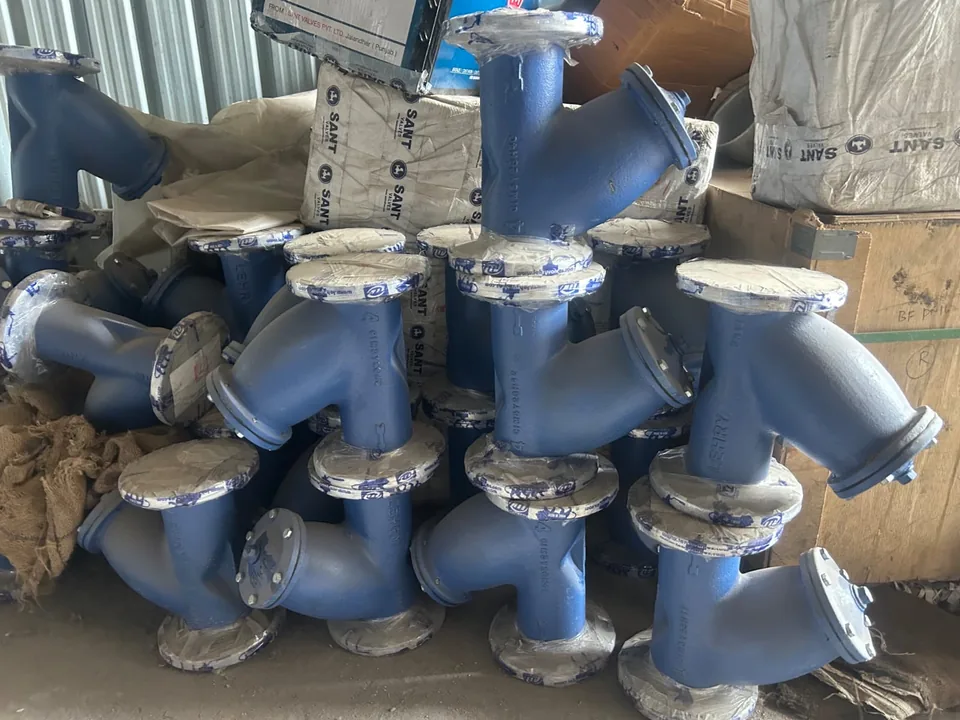
Also called: Y strainer, pipeline strainer, line strainer, Y-type filter, flanged Y strainer
- Since 2019
- GST registered
- MSME (Udyam) registered
- ISO 9001:2015 certified
Delivery across Mumbai, Thane and Navi Mumbai; supply all over India.
What it is
A Y-type strainer is a pipe fitting with a screen in a Y-shaped leg. The flow passes through the screen, which catches scale, weld slag, sand and other dirt before it reaches pumps, control valves, pressure reducing valves, meters and steam traps. The screen is taken out through the cap for cleaning, and many strainers have a blow-off connection to flush it without opening.
Fit it before the equipment it protects, with the arrow in the flow direction. In liquid lines the screen leg points down; in horizontal steam and gas lines it is turned to the side so condensate does not collect in it. Tell us the size, pressure class, body material, ends and screen size.
Types
The common types. Tell us the one your job needs.
Body material
- Cast ironWater and low-pressure service.
- Ductile ironWater and steam at medium pressures.
- Cast steel (WCB)Steam, oil and process lines at higher pressures and temperatures.
- Stainless steel (CF8 / CF8M)Chemicals, food and clean service.
- BronzeSmall screwed strainers for water and air.
Ends
- ScrewedBSP or NPT threads, for small sizes.
- Socket weldWelded into small-bore steel lines.
- FlangedBolts to flanged pipework, Class or PN drilling.
Screen
- Perforated sheetStainless steel sheet with holes, for coarse straining and larger sizes.
- Wire meshFine mesh, often backed by perforated sheet, to catch small particles before steam traps, meters and control valves.
Options
- Blow-off valve or plugFlushes dirt out of the screen without removing the cap.
Grades and standards
Standards buyers commonly specify. Quote the one in your specification.
- ASME B16.5
- Flange drilling for Class-rated steel strainers (Class 150, 300 and up).
- EN 1092 / IS 1538
- PN flange drilling for iron strainers (PN 10, PN 16).
- ISO 7-1 / IS 554
- BSP pipe threads for screwed strainers.
- ASME B16.34
- Pressure–temperature ratings of steel bodies.
Where it is used
Services
- Water
- Steam and condensate
- Oil and fuel
- Compressed air and gases
- Chemicals
Industries
- Boiler houses
- HVAC
- Water treatment
- Chemical and process plants
- Fire protection systems
- Oil terminals
Documents with the order
- Maker's test certificate supplied where available. Ask when you order.
Common questions
What screen size do I need?
It depends on what you are protecting. Fine wire mesh suits steam traps, meters and control valves; a coarser perforated screen suits pumps and general water lines. A finer screen needs cleaning more often.
Y-strainer or basket strainer?
A Y-strainer is compact and suits higher pressures and most line sizes. A basket (pot) strainer holds much more dirt and is easier to clean, so it suits large water and oil lines that carry a lot of debris.
How often should it be cleaned?
Whenever the pressure drop across it rises; gauges on both sides show this. New lines need cleaning often in the first weeks, as weld slag and scale come loose.
Which way should the screen leg point?
Down in liquid lines, so dirt settles in the screen. In horizontal steam and gas lines, turn it to the side so condensate does not collect in it.
Do you supply outside Mumbai?
Yes. We deliver across Mumbai, Thane and Navi Mumbai, and supply all over India.
More line accessories valves
Used with
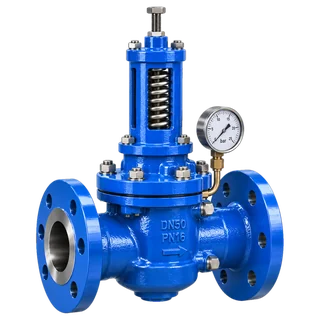 Valves · RegulatingPressure Reducing ValveBrings line pressure down to a set, steady value.
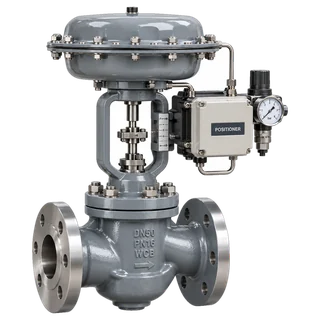 Valves · RegulatingControl ValveAutomatic flow, pressure or temperature control with an actuator.
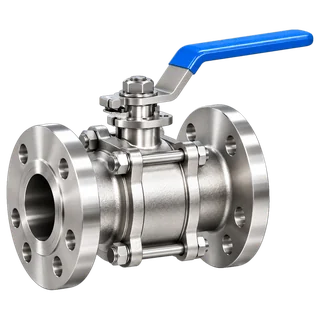 Valves · IsolationBall ValveQuick quarter-turn shut-off for water, gas, oil and chemicals.
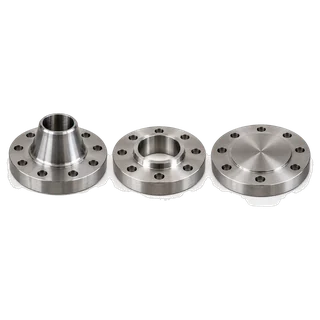 Fittings · FlangesStandard FlangesWeld neck, slip-on, blind and other flanges for bolted joints.
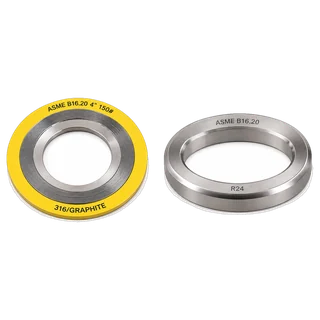 Fittings · Joint partsGasketsSeal flange joints: rubber, spiral wound, RTJ and more.
Get an accurate quote, faster
Send these details with your enquiry, or simply send your BOQ. Add the fittings and valves you need to the same list.
Or email your list to admin@sktradingandco.in
 For valves, tell us
- Size (DN or inch)
- Pressure class
- Body material
- End connection
- Screen material and size
- Fluid and temperature
- Quantity