
1 / 3
Also called: automatic control valve, pneumatic control valve, modulating valve, self-acting control valve, temperature control valve, pressure control valve
- Since 2019
- GST registered
- MSME (Udyam) registered
- ISO 9001:2015 certified
Delivery across Mumbai, Thane and Navi Mumbai; supply all over India.
What it is
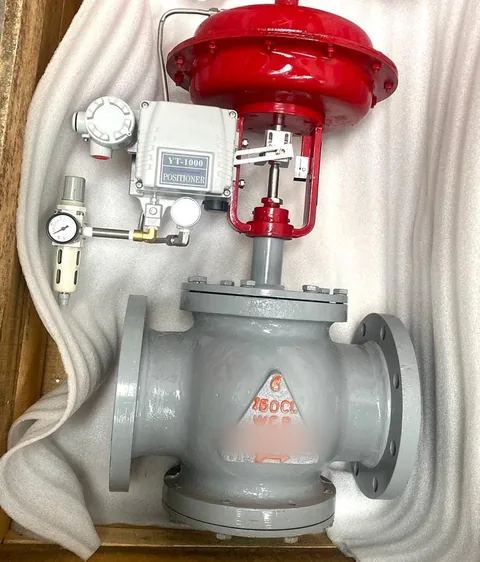
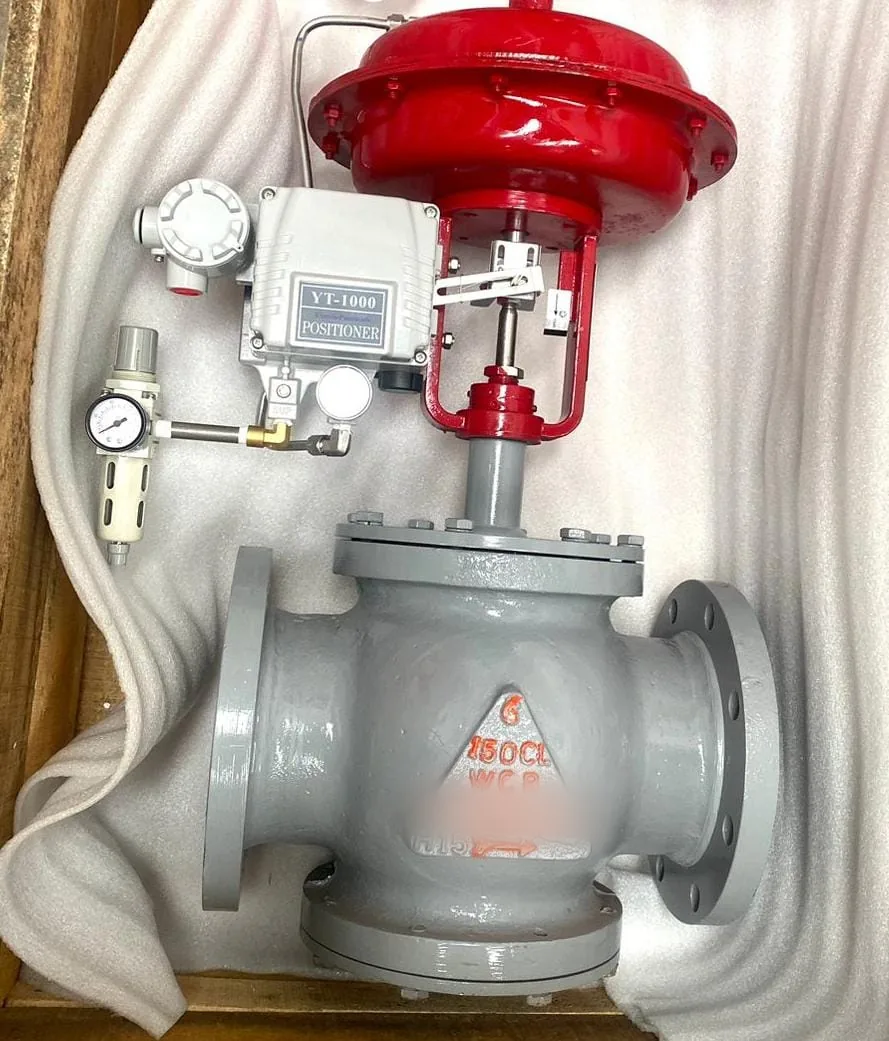
A control valve changes the flow in a line to hold a pressure, temperature, level or flow at its set value. The plant's controller sends a signal, usually 4–20 mA; a positioner turns it into a valve position, and the actuator moves the plug or disc. Self-acting control valves need no power: they sense the pressure or temperature directly and adjust themselves.
A control valve is chosen from the process data: the fluid, the flow (minimum, normal and maximum), the inlet and outlet pressures, the temperature and the line size. From this the valve is sized (its Cv or Kv) and the trim, actuator and accessories are selected.
Types
The common types. Tell us the one your job needs.
Valve type
- GlobeSingle-seated or cage-guided plug. The most common design, with fine control.
- Three-wayMixes two flows or splits one flow into two, for temperature control.
- RotaryButterfly, ball or segment ball valves with an actuator, for large lines and lower pressure drops.
Actuator
- Pneumatic diaphragmSpring and diaphragm worked by instrument air. Fails open or fails closed if the air is lost.
- Pneumatic pistonHigher force and longer stroke.
- ElectricMotor actuator, where there is no instrument air.
Self-acting
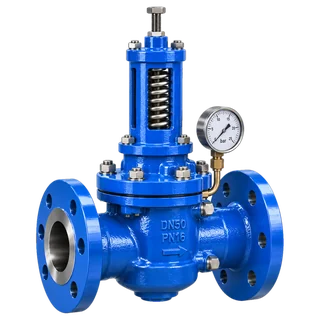
- Pressure controlHolds the pressure after (or before) the valve without any power supply.
- Temperature controlA sensor bulb in the process works the valve through a capillary.
Accessories
- PositionerTurns the control signal into an exact valve position. Electro-pneumatic for a 4–20 mA signal.
- Air filter regulatorGives the positioner a clean, steady air supply.
- Limit switches and position transmitterTell the control room where the valve is.
- HandwheelManual operation if the air or power fails.
Grades and standards
Standards buyers commonly specify. Quote the one in your specification.
- IEC 60534
- Industrial-process control valves: sizing, testing, dimensions and markings.
- ANSI/FCI 70-2
- Seat leakage classes for control valves (Class II to VI).
- ISA-75
- Control valve sizing equations and face-to-face dimensions.
- ASME B16.34
- Pressure–temperature ratings, design and testing of steel valves.
- VDI/VDE 3847 / NAMUR
- Common interfaces for mounting positioners and accessories on actuators.
Where it is used
Services
- Steam
- Hot and chilled water
- Thermal oil
- Process liquids and gases
- Compressed air
Industries
- Power plants
- Chemical and pharmaceutical plants
- Refineries
- Food and dairy
- Textile processing
- HVAC and district cooling
Documents with the order
- Maker's test certificate and data sheet supplied where available. Ask when you order.
Common questions
What data do you need to quote a control valve?
The fluid, the flow at minimum, normal and maximum, the inlet and outlet pressures, the temperature, the line size and rating, the control signal and the position the valve must go to if the air or power fails. A data sheet from your consultant is ideal.
What do fail open and fail closed mean?
They say where the valve goes if the air or signal is lost. Fail closed (air to open) is usual for steam and fuel; fail open (air to close) for cooling water. Choose whatever is safe for your process.
What does a positioner do?
It compares the control signal with the actual valve position and adjusts the air to the actuator until they match. It makes the valve respond accurately even with friction in the gland or changing line pressure.
What is a seat leakage class?
ANSI/FCI 70-2 grades how much a closed control valve may pass, from Class II up to Class VI (bubble-tight soft seat). Tighter shut-off costs more, so specify it only where the process needs it.
What is a self-acting control valve?
A valve that controls pressure or temperature using the process itself: the line pressure or a sensor bulb works the valve, with no air or electric supply. It suits steam and water duties where simple, steady control is enough.
Do you supply outside Mumbai?
Yes. We deliver across Mumbai, Thane and Navi Mumbai, and supply all over India.
More regulating valves
Used with
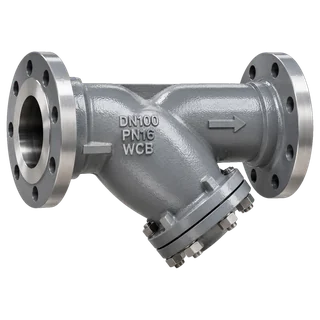 Valves · Line accessoriesY-Type StrainerCatches dirt to protect pumps, valves and meters.
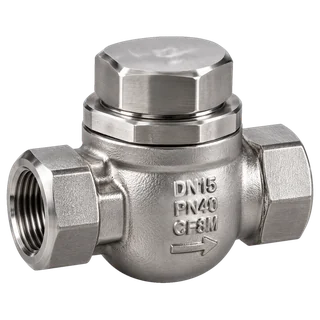 Valves · Line accessoriesSteam TrapRemoves condensate from steam lines without losing steam.
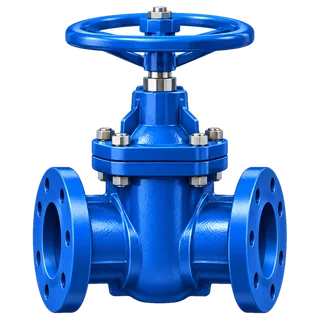 Valves · IsolationGate ValveFully open or fully closed isolation for water, steam, oil and process lines.
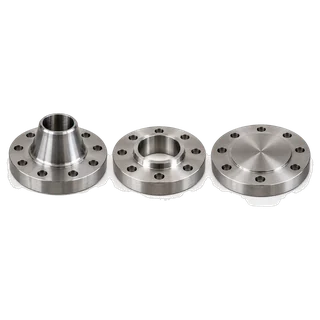 Fittings · FlangesStandard FlangesWeld neck, slip-on, blind and other flanges for bolted joints.
Get an accurate quote, faster
Send these details with your enquiry, or simply send your BOQ. Add the fittings and valves you need to the same list.
Or email your list to admin@sktradingandco.in
 For valves, tell us
- Fluid
- Flow (min, normal, max)
- Inlet and outlet pressure
- Temperature
- Line size and rating
- Control signal (e.g. 4–20 mA)
- Fail position (open or closed)
- Quantity